How to Write a Speech Analysis

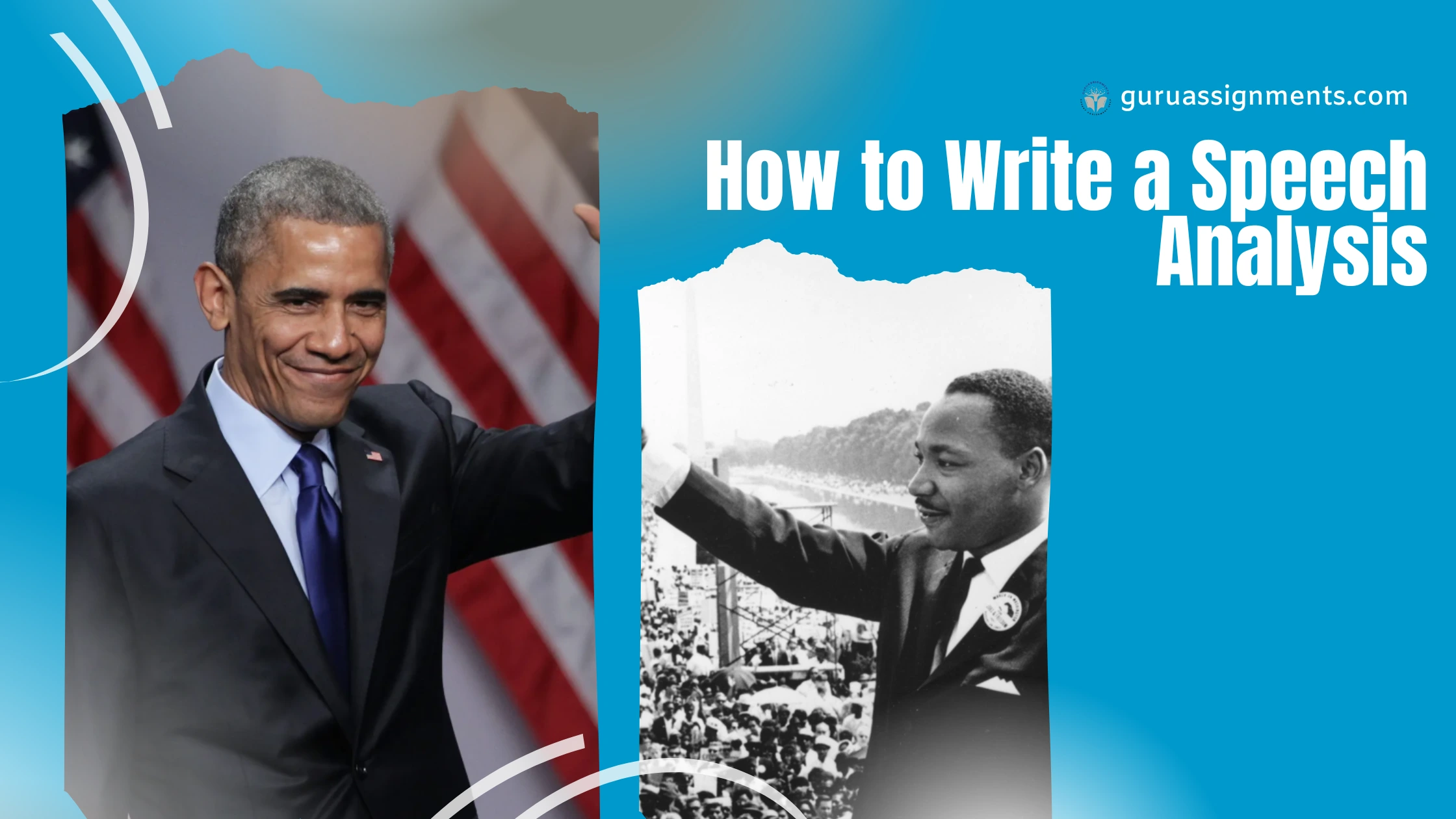
Ever listened to Martin Luther King Jr.’s “I Have a Dream” or Barack Obama’s “Yes We Can.” Did you get goosebumps or rethink your entire perspective? That’s the power of great speechwriting. In the precepts How to Write a Speech Analysis? Speech Analysis can be one of the most insightful ways to understand the power of words and the art of persuasion.
Whether you’re a student tackling a rhetorical assignment or a professional trying to improve communication skills, understanding how to write a compelling speech analysis is essential. Let’s break it all down step by step.
What is Speech Analysis?
Speech analysis is the process of breaking down a spoken message to evaluate how effectively it communicates its message. This involves examining the speaker’s tone, word choices, body language, rhetorical techniques, and how all these elements influence the audience.
Unlike simply summarizing a speech, analysis goes deeper—it looks at how the speech works and why it succeeds (or fails). It’s a blend of language study, critical thinking, and emotional insight.
Why Does Speech Analysis Matter?
Think about some of the most iconic speeches in history:
- Martin Luther King Jr.’s “I Have a Dream”
- Barack Obama’s “Yes We Can”
- Steve Jobs’ Stanford Commencement Address
What made these speeches memorable wasn’t just the content—it was the delivery, structure, emotional pull, and audience connection. Speech analysis teaches you to identify those components and apply them in your own work—whether in writing, presenting, or leading.
Step-by-Step Guide: How to Write a Speech Analysis
Know the Basics: Speaker, Purpose, Audience, Context
Before you analyze any speech, you need to understand the 4Ws:
- Who is speaking?
- What is the purpose?
- Who is the target audience?
- When/Where was the speech delivered?
This background is essential because it informs the tone, examples, language level, and strategies used.
Example: A campaign rally speech will differ vastly in style from a eulogy or TED Talk.
Read or Watch the Speech Repeatedly
One read-through is never enough. Here’s the approach:
- First listen: Focus on the general message.
- Second listen: Take notes on structure, tone, and rhetorical devices.
- Third listen: Highlight key moments—powerful quotes, emotional appeals, or audience reactions.
Take Detailed Notes Using the SOAPSTone Strategy
A popular method for speech analysis is SOAPSTone:
- Speaker – Who is speaking? What’s their credibility or background?
- Occasion – What’s the context? Why now?
- Audience – Who are they talking to?
- Purpose – Persuade? Inform? Inspire?
- Subject – What’s the main topic?
- Tone – What’s the speaker’s attitude?
Using SOAPSTone helps you keep your analysis balanced and focused.
Identify Rhetorical Devices
Speeches often use rhetorical devices to evoke emotion, logic, and credibility. These include:
A. Ethos (Credibility)
- Establishing authority or trust.
- “As a mother and a doctor…”
B. Pathos (Emotion)
- Appealing to feelings.
- “Think of the children…”
C. Logos (Logic)
- Appealing to reason with data or logic.
- “According to CDC research, smoking increases cancer risk by 70%.”
D. Other Devices
- Anaphora: Repetition at the beginning of sentences (“I have a dream…”).
- Alliteration: Repeating consonant sounds (“We will fight for freedom…”).
- Metaphors/Similes: “Let us not wallow in the valley of despair…”
Examine Structure and Flow
Strong speeches are usually well-structured:
- Introduction: Grabs attention, often with a quote, question, or bold statement.
- Body: Main points organized logically.
- Conclusion: A powerful takeaway, often a call to action.
Pro Tip: Pay attention to transitions between sections. Are they smooth? Do they keep the audience engaged?
Consider Delivery and Body Language
If you’re watching a video, note:
- Voice: Volume, pitch, pacing, pauses
- Facial expressions
- Gestures
- Eye contact
- Audience response
Sometimes delivery can transform even average words into something unforgettable.
Formatting Your Speech Analysis Paper
Your analysis should follow an essay structure:
A. Introduction
- Start with a hook
- Mention the speaker, title, date, and event
- State your thesis (the overall effectiveness of the speech)
Example:
In his historic “I Have a Dream” speech, Martin Luther King Jr. uses repetition, biblical references, and emotional appeals to inspire hope and call for civil rights reforms.
B. Body Paragraphs
Each paragraph should focus on a single point. For example:
- Paragraph 1: Use of ethos to build credibility
- Paragraph 2: Use of pathos and emotional language
- Paragraph 3: Use of logos and logical examples
- Paragraph 4: Tone and delivery techniques
Back each point with specific examples and quotes.
C. Conclusion
- Restate your thesis
- Summarize key points
- Reflect on the speech’s impact or relevance today
Case Studies
Analysis of MLK’s “I Have a Dream
Speaker: Dr. Martin Luther King Jr.
Purpose: To inspire hope and advocate for civil rights
Audience: 250,000+ civil rights supporters
Occasion: March on Washington, 1963Key Techniques:
- Repetition: “I have a dream…” builds rhythm and drives home his vision.
- Metaphor: “Let us not seek to satisfy our thirst for freedom by drinking from the cup of bitterness…” evokes imagery.
- Historical references: Lincoln and the Emancipation Proclamation give weight to his argument.
- Tone: Inspirational, prophetic, and emotionally resonant.
Why it works: The mix of emotional appeal, religious references, and hopeful vision created a unifying and unforgettable moment in American history.
Analysis of Barack Obama’s 2004 Democratic National Convention Keynote Address
Barack Obama’s keynote address at the 2004 Democratic National Convention wasn’t just a political endorsement—it was a pivotal moment in American political history. The understanding is that it captured people’s attention due to its plot, which narrates his personal life while reflecting America as a land of opportunities based on a firm belief in equality for all. According to analysts, his eloquence and relevance while relaying the speech contributed to its success during the Democratic National Convention in 2004 (Jones & Cox, 2018). Therefore, the premise of this discussion examines the speech by describing the text and its context.
Purpose and Audience of the 2004 Obama Keynote Speech
The primary goal of the speech was to support John Kerry’s nomination for the presidency. One of the key questions realized at the beginning of the speech points out several instances of Aristotelian rhetoric prior to reading the speech several. While going through the speech, the primary inquests entailed how the former president connected his background to John Kerry’s bid.
After the introduction, the speech contains a simple biographical sketch of the rector, which describes his lineage from his grandfather and how it resonated with the American dream (Jones & Cox, 2018). Major points from the sketch encamp the efforts and sacrifice to get better education as their family moved to America. One of the fundamental points that I remember from the speech was the basic freedoms that characterize America, making it a land of equal opportunities (Fearnall & Palmer). This reflection is noteworthy due to its significance in present-day political and economic events. Astonishing facts from the speech were that many people struggle, yet all they desire is proper allocation and management of public resources.
Thematic Overview: Unity, Opportunity, and the American Dream
Other noteworthy segments include his reference to John Kerry’s main ideas, intending to keep America secure by recognizing and combating dangers. The rationale that most people striving for peace and stability give their life for the welfare of all Americans is what makes this remark unforgettable. As a result, their efforts to care for their families and cover their medical expenditures, among other societal obligations, should not go unrecognized. More crucial is the appeal for togetherness and energizing policies that promote hope.
Key Themes
In retrospect, the main issues covered in the speech included an autobiographical sketch of Obama’s Kenyan origins and how his grandfather and father worked hard to assure a brighter future; this connected with the American ideal. Following that is a reference to basic freedom. Notably, he emphasizes the necessity for the government to make strategic goals because Americans are already working hard to guarantee a better life for their children. The primary purpose of this speech is to support John Kerry by highlighting what marines go through to guarantee peace (Jones & Cox, 2018). Each of the themes focuses on maintaining togetherness and optimism.
Obama expressed his perspectives on recommended actions, confirming that Americans would succeed and communicating trust in the country’s capacity to handle present issues. He finalized by communicating his idealism that Kerry and Edwards would win in November. Further, with their initiation, the nation would win in maintaining critical promises like uniformity and freedom. The speech raises issues about the role of prior regimes in spotlighting equity concerns among the American people and how the federal government meets the needs of troops fighting for peace. Further inquisitions entail the authorities’ responsibilities in enhancing health care via equal distribution of healthcare services across various populations.
Rhetorical Situation
From the keynote speech in 2004, Barack Obama, an unknown Democratic Senate competitor from Illinois, conveyed a feature address at the Democratic National Convention. His discourse, where he makes sense of his experience of the American Dream, drove him into the public spotlight of national politics. His father, Barack Obama, Sr.; left Kenya after getting a scholarship to continue with his studies in the US, after which he rose in ranks as a financial specialist. His mother, S. Ann Dunham, hailed from Kansa in Washing before moving to Honolulu. His mother met Barak Sr. At the University of Hawaii in the early Nineteen Sixties and married a year later. Barack Obama went through several learning institutions (Bose, 2021). For instance, he holds a degree in political science from Occidental College and a degree in law from Harvard University.
Obama moved to Chicago after graduating from law college and joined the Democratic Party. He created a task vote, an improvement that helped the Democrats intending to aid Clinton in winning Illinois and the President in 1992 by asking many African Americans to vote. Illinois Parliamentarian Ditty Moseley Braun has grown to be the top African-American female to vote for the American Senate courtesy of the project. During this time, Obama wrote and brought the best memoir. In the Keynote address, this rich cultural blend rightly explains his view and experience of the American dream. Dreams from My Father (1995); is a diary about his multiracial personality through the existences of his presently perished father and more distant family in Kenya. Obama showed protected regulation at the University of Chicago and filled in as a social equality lawyer.
Historical and Political Context of the Speech
Reports indicated that 9.1 million people watched the convention when Obama presented the keynote speech. This number was ten million less since half the audience regularly tuned to the summer programming a week earlier. Regardless, there was limited coverage by major networks. The demographics included white people, Hispanic whites and non-Latinos. The majority of the listeners were democrats who hoped to vote for John Kerry.
The speech emphasized key problem was enabling Americans to achieve the promised liberties in pursuing the American Dream. The speaker is motivated by his diverse, multicultural upbringing and experiences with folks who have difficulty acquiring medications or transporting their children to school. This speech took place during a political season in which the country was preparing for a general election. Obama gave his address during a delegates’ meeting at the Democratic National Convention (Nkansah, 2018). The speech’s noted limits are a lack of cohesiveness and a lack of prioritizing of requirements by the federal government. This issue connects to every American’s cultural value due to their desire to thrive by grasping every available opportunity through efficient access to education and health care facilities.
Conclusion
In this text analyses Barack Obama’s keynote speech through two distinct sections. The first phase describes the speech by detailing its goal and covered topics. Key components include a biography stretch and Obama’s conviction on why he supported John Kerry by connecting his arguments to the American Dream. The second part of the discussion focuses on the context by describing the audience and distinct challenges identified in the speech. The major motivation covered the path to a brighter future by seizing equitable opportunities in America.
References
Bose, M. (2021). Looking For Change: How Does the Early Leadership of Barack Obama Compare to the First Hundred Days of Franklin D. Roosevelt?. Work.
Fearnall, A., & Palmer, C. The Message. Philosophy, 18(1), 240-245.
Jones, R. P., & Cox, D. (2018). President Barack Obama and His Faith. In Religion and the American Presidency (pp. 261-284). Palgrave Macmillan, Cham.
Nkansah, M. A. (2018). The Relevance of the Message to Time and Space: President Barack Hussein Obama Speaking.
Common Mistakes in Speech Analysis
Being Overly Opinionated
Avoid “I think this speech was boring.” Instead, explain why a certain approach may have failed or succeeded.
Ignoring Delivery
Focusing only on the words misses the full picture. Delivery plays a huge role in how the message is received.
Not Understanding the Audience
A joke or reference that falls flat for one group may resonate strongly with another. Always consider the intended audience.
Sample Thesis Statements for Speech Analysis
- “In her TED Talk on vulnerability, Brené Brown uses humor, personal anecdotes, and emotional appeals to connect with the audience and encourage openness.”
- “Barack Obama’s speech on race in 2008 employs historical context, logical argumentation, and inclusive language to address a deeply divisive topic with poise.”
Tips to Make Your Analysis Stand Out
✅ Quote Strategically
Don’t just list quotes—analyze them! Show how they support your argument.
✅ Keep It Focused
Stay on topic. If you’re analyzing language, don’t veer off into personal feelings about the topic.
✅ Vary Your Sentence Structure
Keep your writing dynamic and engaging—like the speech you’re analyzing!
Practice Exercise: Try Analyzing This Short Excerpt
“The only thing we have to fear is fear itself.” – Franklin D. Roosevelt
- Who is the speaker? U.S. President during the Great Depression
- Audience? Anxious American public
- Device? Antithesis and parallelism
- Purpose? Instill courage and strength during crisis
Write 2–3 sentences analyzing this quote. What tone does it set? What emotions does it evoke?
Final Checklist Before Submitting
- ✅ Is your thesis clear and specific?
- ✅ Did you cover rhetorical devices?
- ✅ Did you analyze structure and delivery?
- ✅ Did you proofread for grammar and flow?
- ✅ Did you include a conclusion that wraps it all up?
Conclusion
Writing a speech analysis isn’t just about spotting fancy words or poetic phrases. It’s about peeling back the layers of a performance to see how and why it worked. You’re becoming a detective of communication—one who understands not only what was said, but how it moved an audience to tears, cheers, or action.
So, the next time you listen to a speech, don’t just nod along. Break it down. Ask why it works. Then, use those lessons to supercharge your own speaking or writing.
❓Frequently Asked Questions (FAQs)
1. What makes a speech powerful?
A powerful speech combines clear structure, emotional connection, rhetorical techniques, and confident delivery.
2. How long should a speech analysis be?
Depending on your assignment or goal, between 1000 to 2000+ words. College-level essays often fall between 1500–2500 words.
3. Can I analyze a speech without a video?
Yes, but if possible, watch a recording to observe tone, pauses, and delivery—it adds depth to your analysis.
4. What’s the difference between summary and analysis?
A summary tells what was said. An analysis explains how it was said and whether it worked.
5. How do I cite a speech in APA or MLA?
- APA: King, M. L. (1963, August 28). I have a dream [Speech audio recording].
- MLA: King, Martin Luther. “I Have a Dream.” 28 Aug. 1963, Lincoln Memorial, Washington, D.C.
Expert Guidance for Your Class: Comprehensive Biology Assignment Help for Students

Do Not Copy Paste!!!!
- Get personalized academic papers just for you
- Save time and get high-quality, custom-written papers