
Examine Two Paintings: Exploring a Shared Theme Across Cultures Through Art


Examine two paintings, identify a common theme and compare 2 chosen paintings to one another as expressions of the same theme in different cultural
artifacts.
Examine Two Paintings: Part I
- Describe the cultural artifacts that you have chosen (see below). Consider questions such as these in your response: What is the name or title of the artifact? Who is the author or artist? What is the date or time period when the artifact was created? What is the cultural location or physical setting of the artifact? In addition, you could consider including a photograph or image of each cultural artifact, if they are visual artifacts.
- Identify at least one common theme that will serve as the framework of your exploration document. How is the theme expressed in your artifacts?
- Reflect on how the theme you identified is related to your personal experience. For instance, you could discuss how the expression of the theme in your cultural artifacts is connected to you personally.
- Discuss a profession that could be impacted by the theme you identified. In other words, how is the theme you identified related to professional experiences? How could a working knowledge of the humanities be useful in this field?
- Describe at least three humanities resources that you could use to investigate your theme and artifacts. Your sources must be relevant to your theme and of an appropriate academic nature. In your description, consider questions such as the following: What are the similarities and differences in the content of your sources? What makes them appropriate and relevant for investigating your issue? What was your thought process when you were searching for sources? How did you make choices? Did you encounter any obstacles and, if so, how did you overcome them? If you did not, why do you think it was so easy to find what you needed?
- Use the humanities resources that you selected to research your theme and cultural artifacts, making sure that you cite your sources. Based on your research, do the following:
A. Discuss the relationship between each cultural artifact and its historical context. In other words, what were the circumstances under which each artifact was created?
B. Explain the similarities and differences that you observe in the cultural artifacts you selected, in relation to the theme. For instance, do the artifacts contain any symbolism? If so, how are the symbols both similar and different? What do the symbols tell you about each artifact?
C. Discuss the medium—such as literature, music, or sculpture—through which your cultural artifacts were created. For instance, how did the creator or creators of each artifact use the medium to convey something about the meaning of the artifact?
- Based on your research, develop a thesis statement that conveys the claim you plan to make about your theme and artifacts. Your thesis statement should be clear, specific, and arguable.
- Based on your research, identify an audience that would be interested in your theme and thesis statement. For example, who would benefit most from hearing your message?
- Describe how and why you can tailor your message to your audience, providing specific examples based on your research. For example, will your audience understand the terminology and principles used by humanities scholars, or will you need to explain these? How will you communicate effectively with your audience?
- Provide a reference list that includes all of the humanities resources you used to research your artifacts, theme, and thesis statement. Ensure that your list is formatted according to current APA guidelines (or another format with instructor permission).
Examine Two Paintings: Part II
- How are these paintings (see below) situated within the domain of the humanities?
- Explain how the theme, as it is expressed in the cultural artifacts, and thesis statement impact the audience. In other words, how is the theme relevant to members of the audience? Why should the audience care about your thesis statement? Support your response with specific examples from your exploration document.
- Describe the evidence from subjective and objective cultural analyses that you have to support your conclusions about the impact of the theme and cultural artifacts on you personally and on your audience. Support your response with specific examples from your exploration document.
- Explain why the theme and cultural artifacts are important to you personally. In other words, why did you select these artifacts to study? Why did you select your theme, especially if there are other themes that could apply?
- Explain how studying the humanities can give you both a personal and professional advantage. In other words, what is the benefit of studying the humanities?
- Explain why the humanities are important to society. In other words, what do the humanities tell us about our own culture and experiences? How do the humanities impact us? Support your response with specific examples from your exploration document and your own personal and professional experiences.
- Communicate your message in a way that is tailored to your specific audience. For instance, you could consider your vocabulary, your audience’s potential current humanities knowledge or lack thereof, and what is specifically important to the audience.
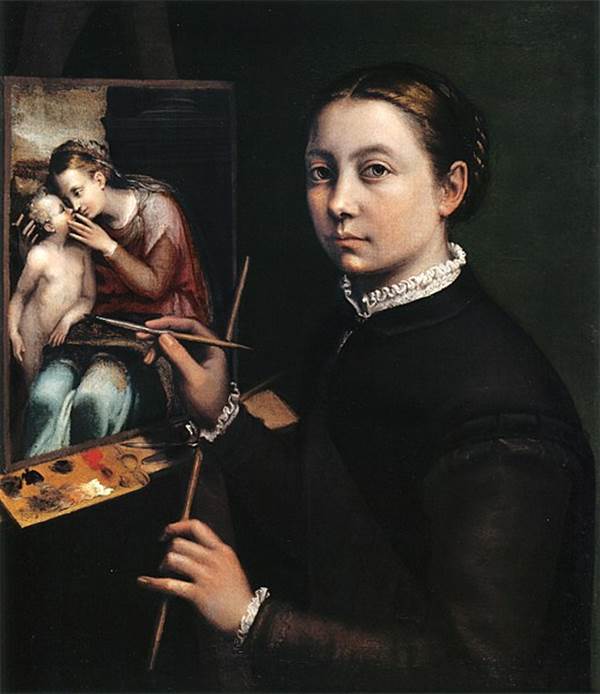
Self-portrait at the Easel Painting a Devotional Panel by Sofonisba Anguissola
Self-portrait which was painted in 1556 by Sofonisba represented in the traditionally male role of the confident artist by creating places for women within the art world, regardless of their sex. Overtime, Sofonisba became the first great woman painter of the Renaissance and was able to achieve international fame.
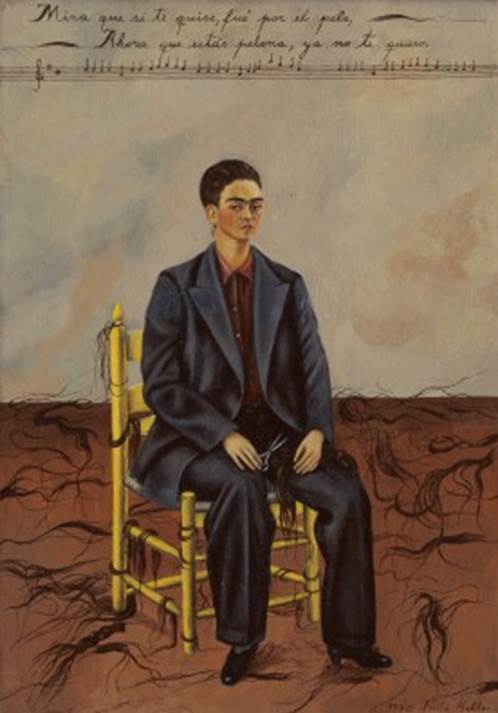
Frida Kahlo. Self-Portrait with Cropped Hair. 1940
Frida Kahlo had a great impact on gender equality through her paintings. Despite the harsh gender inequality of the 1900s, Kahlo was honest about being a woman by painting raw and honest experiences that so many women face. Self-Portrait with Cropped Hair symbolized self-reliance and independence from men.
Part I
1. Description of Cultural Artifacts
Artifact 1:
– Title: Self-portrait at the Easel Painting a Devotional Panel
– Artist: Sofonisba Anguissola
– Date: 1556
– Cultural Context: Italian Renaissance
– Medium: Oil on canvas
– Setting: Created in Cremona, Italy, where Sofonisba Anguissola was among the first recognized female artists of the Renaissance. The painting shows her confidently engaged in a traditionally male role—artist and creator—portraying herself in the act of painting a Madonna and Child.
Artifact 2:
– Title: Self-Portrait with Cropped Hair
– Artist: Frida Kahlo
– Date: 1940
– Cultural Context: Post-Revolutionary Mexico
– Medium: Oil on canvas
– Setting: Painted after her divorce from Diego Rivera, this piece shows Kahlo wearing a man’s suit and holding scissors, surrounded by the hair she has cut. It powerfully symbolizes rejection of traditional feminine norms and the assertion of independence.
2. Common Theme: Challenging Gender Norms
Both works express the theme of women asserting autonomy and challenging gender roles through self-representation. Anguissola inserts herself into the masculine sphere of painting—especially religious art—while Kahlo literally cuts away her femininity to claim personal and artistic independence. Each artist uses her image not only to present herself but to make a broader statement about women’s capabilities and identity.
3. Personal Reflection
This theme resonates personally with me as a woman navigating professional spaces historically dominated by men. Seeing women like Anguissola and Kahlo boldly define their own identities is both validating and empowering. Their work reminds me that self-expression is a form of resistance and transformation.
4. Profession Impacted: Education
In education, especially in art history and gender studies, this theme is crucial. Understanding how artists like Anguissola and Kahlo challenged norms can inform curriculum design, teaching strategies, and inspire students. It encourages educators to present diverse narratives and foster inclusive classroom discussions.
5. Humanities Resources for Research
1. Garrard, Mary D. (1989). Artemisia Gentileschi: The Image of the Female Hero in Italian Baroque Art.
– Though focused on another female artist, this book contextualizes how women redefined artistic roles.
– Helped frame Anguissola’s legacy.
2. Herrera, Hayden. (1983). Frida: A Biography of Frida Kahlo.
– A foundational text for understanding Kahlo’s life and the political, personal, and gender themes in her art.
3. Nochlin, Linda. (1971). Why Have There Been No Great Women Artists?
– Offers a feminist critique of the art world and supports the theme of institutional gender bias.
Research Process Reflection:
I sought resources with academic credibility, starting with library databases and JSTOR. I looked for books and essays written by scholars in feminist art history. An obstacle was filtering out overly general sources; I overcame it by focusing on specific artist-focused studies.
6. Humanities Research Application
A. Historical Contexts:
– Anguissola: Her work emerged in a time when women were not accepted as professional artists. She carefully navigated social norms by portraying herself modestly but with artistic authority.
– Kahlo: Her work came at a time of shifting national and gender identities in Mexico. She used her art to address personal pain, politics, and gender nonconformity.
B. Symbolism and Differences:
– Anguissola: Symbolizes discipline, piety, and legitimacy in a male-dominated field through religious imagery and her self-portrait as a professional.
– Kahlo: Uses her cropped hair and suit as symbols of rebellion and self-possession.
Despite different styles and time periods, both use their image to assert agency.
C. Medium as Message:
– Oil painting allows both artists to embed detailed symbolism and visual metaphors. Anguissola’s Renaissance technique emphasizes realism and authority; Kahlo’s modern, surrealist style emphasizes emotion and symbolism.
7. Thesis Statement
Through their self-portraits, Sofonisba Anguissola and Frida Kahlo assert female autonomy and challenge gender expectations in their respective eras, using visual self-representation as a radical act of identity and resistance.
8. Target Audience
The primary audience includes students and educators in gender studies, art history, and cultural studies—individuals interested in how visual art has been used to defy gender norms and assert identity.
9. Tailoring the Message
To effectively communicate with an academic audience, I’ll use scholarly language but ensure clarity through examples and visual analysis. For general audiences, I’d explain terms like ‘gender norms’ and provide accessible context to avoid assumptions of prior knowledge.
10. Reference List (APA Style)
Garrard, M. D. (1989). *Artemisia Gentileschi: The image of the female hero in Italian Baroque art*. Princeton University Press.
Herrera, H. (1983). *Frida: A biography of Frida Kahlo*. Harper & Row.
Nochlin, L. (1971). *Why have there been no great women artists?* ARTnews, 69(9), 22–39.
Part II
1. Position in the Humanities
These paintings belong within visual arts, a central field of the humanities that explores human expression, values, and cultural narratives. They are key examples of how self-portraiture reveals complex personal and societal issues.
2. Audience Impact
By exploring the theme of gender nonconformity through visual art, the thesis challenges audiences to reconsider historical narratives that marginalize women. Kahlo and Anguissola serve as exemplars of how women shaped culture from the margins.
3. Subjective and Objective Analysis
Subjective: Personally, I feel inspired and validated by these images. They give voice to women’s strength and complexity.
Objective: Scholarly sources confirm that these works were created in defiance of the norms of their time—Anguissola’s training was unusual for a woman, and Kahlo’s masculine dress and themes were provocative.
4. Personal Importance
I chose these works because they speak to the struggle for self-definition. As a woman balancing career, identity, and societal expectation, these portraits reflect internal conflicts I relate to deeply.
5. Humanities Advantage
Studying the humanities cultivates empathy, cultural awareness, and critical thinking. These skills are vital in many fields, from education to public policy, allowing for more informed and inclusive practices.
6. Societal Importance of the Humanities
The humanities help society understand itself. By examining stories like those of Anguissola and Kahlo, we see how norms evolve and how individuals resist oppression. They reveal history not as a series of dates, but as lived experience.
7. Tailoring Communication
To connect with my audience—scholars, students, and general readers—I will balance academic rigor with accessibility. I’ll include high-quality images, use clear visuals and quotes, and avoid jargon without explanation.
